Does Fiber Remove PFAS? What One Oat Trial Really Showed
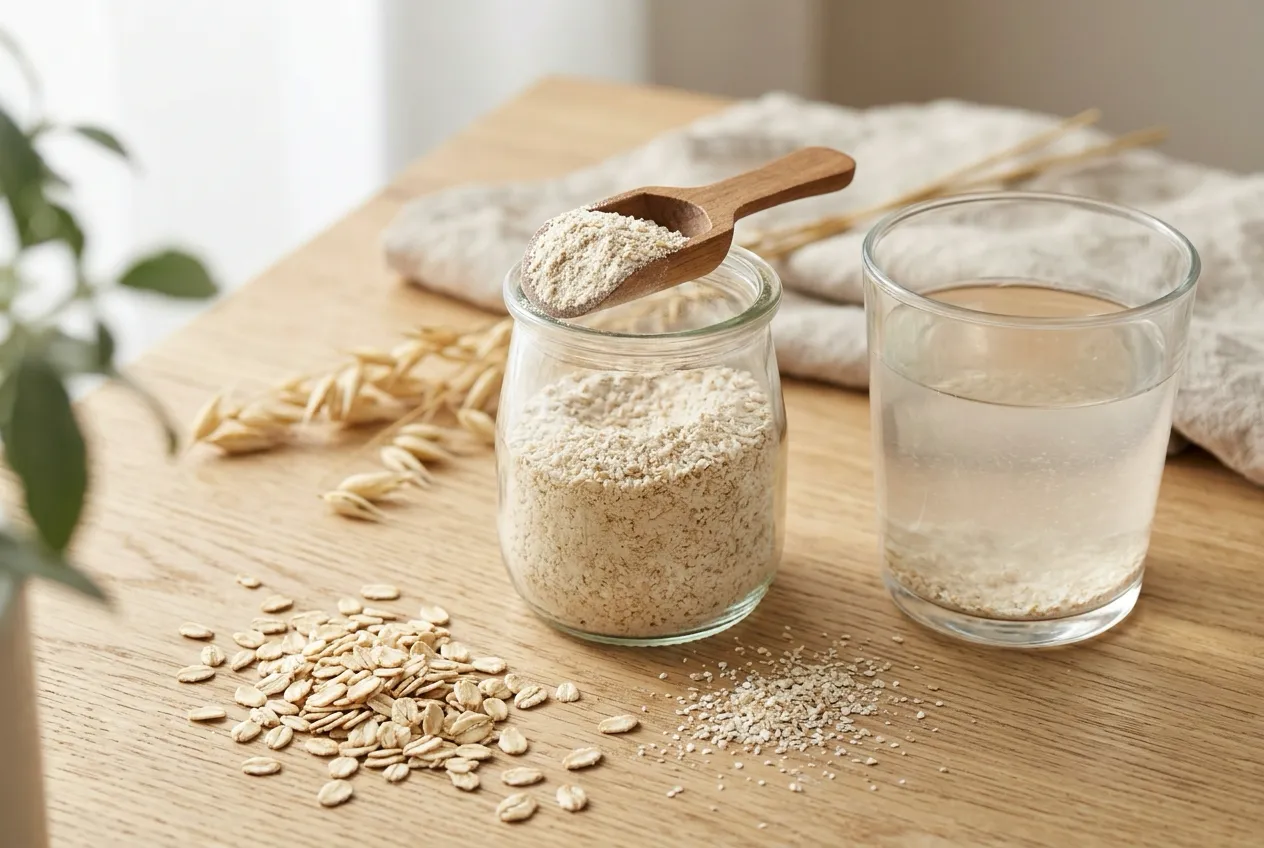
A single question has pulled a humble breakfast fiber into the forever-chemicals conversation this autumn: does fiber remove PFAS from your blood? The headline version, built on one small oat trial, says yes, and the supplement shelf has already started selling the answer.
The real finding is quieter, and more interesting, than the coverage. The trial it rests on was not even designed to study PFAS. Read the paper instead of the press release and the honest answer comes in two halves. One is about cholesterol and it is rock solid. The other is about forever chemicals and it is a real signal wearing a large cautionary footnote.
What Is Oat Beta-Glucan?
Oat beta-glucan is the soluble fiber packed into the cell walls of oats, concentrated in the bran. Stir it into water and it thickens into a gel, and that gel is the whole mechanism. As it moves through the gut it traps bile acids, the cholesterol-rich fluid the liver squirts in to digest fat, and carries them out in stool. The liver then pulls cholesterol out of the blood to make more bile acids, and your LDL falls. This is well enough established that oats carry an official heart-health claim in several countries.
Two things about that gel matter before anyone reaches for a tub. First, oat beta-glucan is not the beta-glucan in the immune capsules sold next to it. The yeast and mushroom versions are a different molecule, largely insoluble, and they do not form the same gel. Second, the forever-chemicals idea rides entirely on the bile-acid trick. Long-chain PFAS are chemically a bit like bile acids and recirculate between the gut and liver the same way, so a fiber that sweeps out bile acids might, in theory, carry some PFAS along with them. The cholesterol drugs built to bind bile acids do speed PFAS clearance in people living in contaminated areas, which is why the theory is worth testing at all. Theory is the right word, though, and the trial everyone is citing is where it meets the evidence.
The Science: Does Fiber Remove PFAS, or Mostly Lower Cholesterol?
Both claims trace back to the same Canadian volunteers, because the PFAS result was squeezed out of a study originally run to measure cholesterol. That shared origin is why one half is strong and the other is tentative.
The cholesterol effect is the settled part
- The Evidence: A meta-analysis pooled 28 randomized controlled trials of at least 3 grams a day of oat beta-glucan against a matched control. LDL cholesterol fell by 0.25 mmol/L, roughly 10 mg/dL, with a 95 percent confidence interval of 0.20 to 0.30 and P below 0.0001, and total cholesterol fell by 0.30 mmol/L. HDL and triglycerides did not move.
- Read the study: Cholesterol-lowering effects of oat β-glucan: a meta-analysis of randomized controlled trials
That is a modest number, not a statin, but it is dependable and it shows up across dozens of trials. If you buy oat fiber for one reason, this is the reason that will not let you down. It also sets up the PFAS study, because the samples came from exactly this kind of cholesterol trial.
The PFAS trial, read line by line
- The Evidence: Researchers took stored blood from a four week randomized, placebo-controlled oat beta-glucan cholesterol trial in 72 Canadian men and measured their PFAS. Forty-two drank 3 grams of oat beta-glucan a day, one gram with each meal, and 30 drank a rice-powder placebo. Total PFAS fell in both groups by the end, and the combined level dropped about 8 percent in the fiber arm, but the difference between fiber and placebo was not statistically significant. Where the fiber group did stand apart was a specific cluster of long-chain PFAS. The two compounds that dominate the headlines, PFOA and PFOS, did not change significantly on their own.
- Read the study: PFAS in circulation in a Canadian population, and piloting a novel method to reduce serum PFAS
So the “nearly 10 percent drop in PFOA and PFOS” that bounced around the coverage is not what the paper reports. PFAS fell in the placebo group too, which means some of the change was never about the fiber. The honest read is that oat beta-glucan nudged the heaviest, most persistent PFAS downward in a small group of men over a month, and that is a lead worth chasing, not a cleanse. It is the same gap between a result and its press release that runs through the supplement shelf, the kind that let an 80 percent plaque reduction appear in a garlic trial that never reported it.
A Practical Guide: How to Use It
The dose is the easy part: 3 grams of beta-glucan a day, which is both the cholesterol-claim threshold and what the PFAS pilot used. Spread it across meals, a gram at a time, the way the trial did, and take it with water because the gel needs fluid to form. The product here is oat bran standardized so that one 11 gram scoop delivers that full 3 grams, which lines the dose up with the research rather than leaving you guessing.
The label is where people go wrong. You want the soluble oat form, not a yeast or mushroom beta-glucan capsule, and not a generic “oat fiber” that is mostly the insoluble hull with little beta-glucan left. Set your expectation to match the evidence. Take it for the cholesterol, where the payoff is proven and useful, and treat any effect on forever chemicals as an unconfirmed bonus. If PFAS exposure is your real concern, a good water filter and watching food packaging will do far more than a scoop of fiber. The same cardiovascular logic is why people stack it alongside the omega-3s that carry the heart data.
Safety and Advice
Oat fiber is about as safe as a supplement gets. The usual complaint is gas, bloating or loose stools in the first week, which fades if you start with a smaller scoop and build up while drinking more water. Because the gel slows digestion, it can blunt how well you absorb some medications and minerals taken at the same moment, so keep a two hour gap between your fiber and any prescription drug or multivitamin. People with a swallowing disorder or a history of bowel obstruction should check with a doctor first, since any bulking fiber can be a problem there. None of this turns a daily scoop into a detox, and it is not a substitute for medical care if your cholesterol or your PFAS levels are genuinely high.
The Bottom Line
Does fiber remove PFAS? The evidence does not support a clean yes. What it supports is narrower and more honest: oat beta-glucan reliably lowers LDL cholesterol, and in one small trial the heaviest forever chemicals drifted down in a fiber group that only partly out-ran its placebo. Buy it for the cholesterol, which is settled, and let the PFAS question stay an open maybe until a trial is built to answer it. If you want to start, 3 grams a day of the soluble oat form, taken with food, is the dose the research actually tested.
This article is for educational purposes only and is not medical advice. Supplements can interact with medications and health conditions, so talk to a qualified healthcare provider before starting anything new.
Common questions
Does oat fiber remove PFAS from your body?
One small trial found total PFAS dropped in both the oat fiber group and the placebo group over four weeks, with the fiber group pulling ahead only on a set of long-chain PFAS. The individual compounds people worry about most, PFOA and PFOS, did not change significantly. It is an early signal, not proof that fiber clears forever chemicals.
How much oat beta-glucan did the studies use?
Three grams a day, taken as one gram before or with each of three meals. That is the same dose behind the cholesterol evidence, and it matches a level oats carry a recognized heart-health claim for.
Is oat fiber the same as the beta-glucan in immune capsules?
No. The oat form is a soluble, gel-forming fiber that was tested in these trials. Yeast and mushroom beta-glucan sold for immune support is a different, largely insoluble molecule and was not what the studies used.
What does oat beta-glucan definitely do?
It lowers LDL cholesterol. A meta-analysis of 28 randomized trials found about a 0.25 mmol/L drop at 3 grams a day, which is why oats carry an official cholesterol claim. The PFAS question is far less settled.